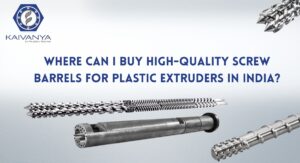


Choosing the right screw barrel for extrusion and injection moulding machines is essential for achieving consistent output, efficient plastic processing, and dependable machine performance. The screw barrel directly influences material conveying, melting, mixing, pressure generation, and final product quality. Whether you operate a plastic extrusion line, injection moulding machine, compounding system, or recycling plant, the correct screw barrel can significantly improve process stability and service life. Selecting the right combination of screw geometry, barrel material, diameter, L/D ratio, and surface treatment helps ensure reliable performance while reducing premature wear, downtime, and maintenance costs.
Screw Barrel for Extrusion and Injection Machine
A screw barrel is a precision-engineered component designed to process and transport thermoplastic materials through controlled heating, shearing, compression, and conveying. During operation, the rotating screw moves material through the barrel while controlled temperature and pressure transform the polymer into a homogeneous melt.
Screw barrels are available in configurations such as single screw and twin screw designs, depending on the machine and application. The ideal selection depends on polymer type, additives, processing temperature, throughput requirements, screw speed, and operating conditions. For demanding applications, nitrided, hardened, or bimetallic screw barrels can provide enhanced wear and corrosion resistance.
Key Features for Extrusion and Injection Machine
A high-quality extrusion screw barrel should be selected according to the material being processed and the machine’s operating requirements. Important factors include screw diameter, screw length, length-to-diameter (L/D) ratio, flight geometry, compression ratio, and material construction.
Common barrel materials include 38CrMoAlA (SACM645), EN41B, 42CrMo, 34CrAlNi7, H13/SKD61, depending on application requirements. Surface treatments and alloy linings can further improve hardness, wear resistance, and corrosion protection. Typical screw diameters may range from approximately 20 mm to 300 mm, while L/D ratios can commonly range from 18:1 to 40:1. Custom designs can be engineered for specific machines, polymers, and production requirements.
Screw Barrel Benefits for Extrusion and Injection Machines
screw barrel delivers powerful advantages throughout the production process. An application-matched design promotes stable material conveying, uniform melting, effective mixing, and consistent pressure generation, helping manufacturers maintain dependable product quality.
A properly engineered screw barrel can also improve production efficiency and reduce unnecessary energy consumption caused by poor processing conditions. Wear-resistant materials and surface treatments can extend component life when processing abrasive or corrosive polymers. This translates into fewer unplanned shutdowns, reduced replacement frequency, lower maintenance requirements, and improved equipment availability.
For manufacturers handling demanding compounds, fillers, glass fibres, flame retardants, or recycled materials, choosing an appropriate wear-resistant screw barrel is particularly important for maintaining long-term performance.
Extrusion and Injection Machine Applications
Screw barrels are widely used across the plastic extrusion and injection moulding industry. In extrusion applications, they are used for producing pipes, profiles, sheets, films, cables, pellets, masterbatch, and various plastic products. Injection moulding machines use screw barrels to plasticize and inject molten polymer into mould cavities with controlled pressure and repeatability.
They are also suitable for plastic recycling, compounding, masterbatch production, packaging, automotive components, electrical products, consumer goods, and engineering plastics. The correct barrel configuration is especially important when processing materials containing abrasive fillers, corrosive additives, or high-performance polymers that can accelerate component wear.
Screw Barrel Specifications & Technical Details
When selecting the right screw barrel for extrusion or injection moulding applications, it is important to evaluate screw configuration, diameter, L/D ratio, material, surface treatment, screw design and customization options. The following technical specifications provide a practical reference for choosing an application-specific extrusion screw barrel or injection moulding screw barrel.
| Parameter | Typical Specification / Consideration |
|---|---|
| Product Type | Extrusion Screw Barrel / Injection Moulding Screw Barrel |
| Screw Configuration | Single Screw / Twin Screw |
| Screw Diameter | Approximately 20 mm – 300 mm |
| L/D Ratio | Approximately 18:1 – 40:1 |
| Common Base Materials | 38CrMoAlA (SACM645), EN41B, 42CrMo, 34CrAlNi7, H13 / SKD61 |
| Surface Treatment | Nitriding / Hardened / Application-Specific Surface Treatment |
| Screw Design | General Purpose / Barrier / Mixing / Custom Geometry |
| Application | Extrusion, Injection Moulding, Compounding, Recycling |
| Customization | Diameter, Length, Screw Geometry, Base Material and Alloy Options |
Why Choose the Right Manufacturer Extrusion and Injection Machine?
The manufacturer plays a critical role in achieving reliable screw barrel performance. Choose a supplier capable of providing precision machining, controlled metallurgy, accurate screw geometry, appropriate heat treatment, surface finishing, and application-specific engineering. Quality inspection at critical manufacturing stages helps maintain dimensional accuracy and repeatability.
An experienced screw barrel manufacturer should also be able to review your machine specifications and processing material before recommending a suitable configuration. Custom engineering, technical consultation, quality assurance, and dependable after-sales support can make the difference between a component that fits the machine and one that delivers optimized processing performance.
Contact Us
Ready to improve your extrusion or injection moulding performance? Choose a precision-engineered screw barrel matched to your machine, material, and production requirements. Share your machine specifications and application details to get the right recommendation. Request a Quote or talk to a Screw Barrel Expert today and take the next step toward reliable, efficient plastic processing.