

Why Choose a Bimetallic Screw for Polymer Processing?
A bimetallic screw is designed for plastic-processing conditions where ordinary flight surfaces may lose size or performance too quickly. It combines a load-bearing alloy-steel core with a second material system selected to resist abrasion, corrosion, or both. Extruders, injection moulders, recyclers and compounders use this construction for filled polymers, reinforced resins, masterbatch and corrosive formulations. The real advantage is material efficiency. The screw retains a tough structural core while premium protection is concentrated where wear occurs. When metallurgy, geometry, and barrel clearance are correctly matched, processors can achieve more stable output, melt quality, and maintenance planning.
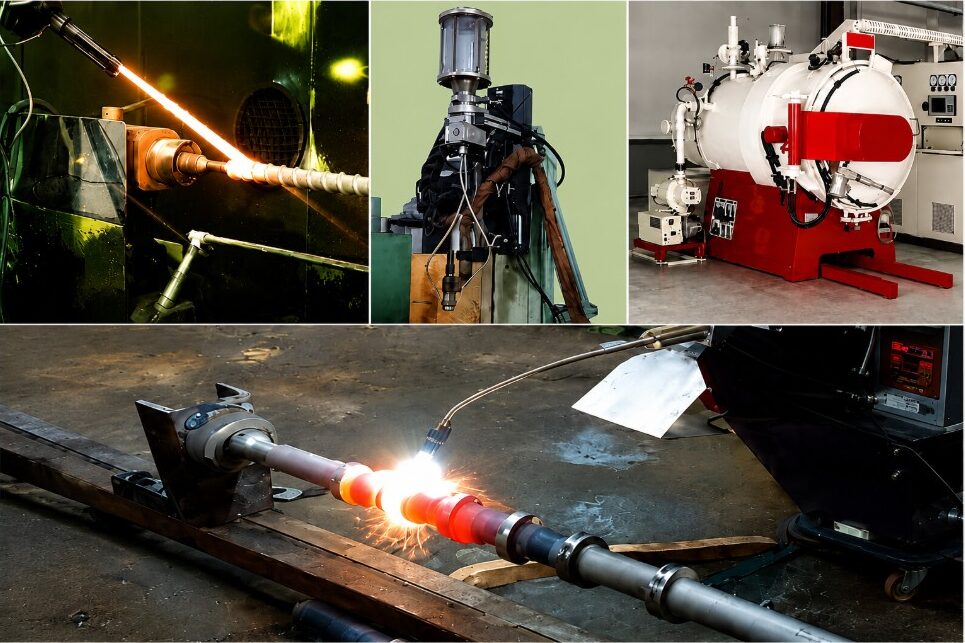
How Premium Materials Are Applied to a Bimetallic Screw?
The base screw is machined from an approved alloy steel chosen to carry torque and resist mechanical loading. Selected flight surfaces, tips, or mixing zones then receive a manufacturer-qualified wear alloy through a controlled hardfacing or bonding process. Depending on the formulation, the protection may use nickel-based, cobalt-based, or carbide-bearing systems, subject to documented compatibility and processing limits. During operation, the screw conveys, compresses, melts and meters material inside the barrel. Available variants include extrusion, injection-moulding, barrier, mixing, vented and recycling screws. Important differences include core material, protective-alloy family, treated area, layer integrity, heat treatment, hardness profile, surface finish, dimensional tolerance and barrel compatibility.
Material and Design Features of a Premium Bimetallic Screw
High-quality construction starts with traceable core material and a wear system selected from the actual resin, filler, additive, and operating environment. Nickel-based protection may suit certain combined wear and corrosion duties, while cobalt-based or carbide-bearing systems may be considered for more demanding conditions after technical review. Precision machining maintains flight diameter, pitch, compression profile, root geometry, straightness and screw-to-barrel clearance. Optional designs include barrier flights, distributive or dispersive mixing sections, protected tips and rebuilt wear zones. Machine-specific sizes are available for extrusion and injection moulding. Alloy composition, hardness, layer depth, temperature limit, pressure limit and compatibility must be confirmed through approved documentation.
Business Benefits of Selecting the Correct Bimetallic Screw Material
Material selection based on the real formulation can slow wear where it begins, helping the screw retain useful flight geometry and plasticizing performance. More stable screw-to-barrel clearance supports consistent throughput, shot weight, mixing, and energy use over longer service periods. Targeted protection can reduce premature replacement, unexpected downtime, and repeated maintenance labour without requiring a complete machine change. Accurate dimensions and drive interfaces also simplify installation on existing equipment. Where corrosive additives or abrasive fillers are present, a compatible alloy provides more dependable protection than a generic coating choice. Documented materials and inspection results give maintenance teams better traceability, purchasing confidence, and a measurable baseline for future wear checks.
Applications for Bimetallic Screws in Plastics Manufacturing
Filled PVC, pipe, profile, sheet and cable extruders use wear-resistant screws when minerals and stabilizer systems challenge standard surfaces. Masterbatch producers process concentrated pigments, calcium carbonate and performance additives that demand controlled mixing and abrasion resistance. Engineering-plastic compounders handle glass fibre, flame retardants, impact modifiers and reinforced polymers. Recycling extruders may require protected flights for approved reclaimed materials with variable abrasive content. Injection moulders use bimetallic screws for automotive, electrical, appliance, packaging and industrial components made from filled or reinforced resins. Medical, food-contact and highly corrosive applications need separate validation of alloy composition, cleanability and regulatory suitability before any material system is approved.
Bimetallic Screw Specifications and Material Requirements
| Technical parameter | Specification requirement |
|---|---|
| Product type | Wear- and corrosion-resistant bimetallic processing screw |
| Machine compatibility | Extrusion or injection-moulding machine |
| Core material | Approved heat-treated alloy steel |
| Wear-protection material | Nickel-, cobalt- or carbide-bearing alloy selected after application review |
| Hardfacing method | Manufacturer-qualified welding, bonding or deposition process |
| Protected zones | Flights, screw tip, mixing section and other identified wear areas |
| Screw diameter | Matched to the approved barrel bore |
| Working and overall length | As per machine drawing |
| L/D ratio | Machine- and process-specific |
| Compression ratio | Selected according to resin and processing requirement |
| Flight geometry | General-purpose, barrier, mixing, vented or custom |
| Root diameter and pitch | Defined in the approved screw drawing |
| Screw tip | Standard, non-return, mixing or application-specific design |
| Drive connection | Spline, keyway, coupling or OEM-specific interface |
| Rotation direction | Confirmed for the existing machine |
| Layer depth | Defined by the approved wear-protection specification |
| Hardness range | Verified through material and hardness test reports |
| Surface finish | Defined in the drawing and inspection plan |
| Straightness and runout | Checked against agreed tolerances |
| Screw-to-barrel clearance | Set according to diameter, material and operating temperature |
| Process compatibility | PVC, PE, PP, ABS, filled, reinforced, recycled or approved polymers |
| Operating temperature | Material- and model-specific |
| Screw speed and torque | Confirmed from machine and gearbox ratings |
| Maximum process pressure | Verified for the extruder or injection-moulding application |
| Pressure class | Not applicable; specify maximum allowable melt or injection pressure |
| Customization | Barrier flights, mixing elements, protected tips, rebuilding and reverse engineering |
| Quality documentation | Drawing, material certificate, hardness report and dimensional inspection |
Choosing a Premium Bimetallic Screw Manufacturer in India
Select a bimetallic screw manufacturer that recommends materials only after reviewing the formulation, wear mechanism, barrel condition, machine model, and operating history. Ask how the core steel, wear alloy, application process, heat treatment, and critical dimensions will be controlled. A dependable bimetallic screw manufacturer in India should provide approved drawings, material traceability, hardness results, and dimensional inspection. Compare alloy expertise, machining capability, repair assessment, reverse engineering, delivery planning, and technical support. The best bimetallic screw price is the proposal that matches the wear problem and documented requirements, not simply the lowest quotation.
Request a Bimetallic Screw Material Recommendation
Share your machine model, processed resin, filler content, operating temperature, existing drawing, barrel dimensions, and wear photographs. Contact us today for an application-based core and wear-alloy recommendation, confirmed screw geometry, inspection scope, estimated delivery, and commercial proposal.