

What Is A Rubber Screw And Barrel?
A Rubber Screw And Barrel is a precision-engineered processing component designed for rubber extrusion and related elastomer processing applications. It works with the screw to convey, compress, mix, heat, and homogenize rubber compounds before extrusion. Built for demanding production environments, a quality rubber screw barrel helps maintain stable material flow, consistent pressure, and reliable output. It is widely required by rubber extrusion machine manufacturers, rubber product manufacturers, and processors handling demanding elastomer compounds. The right screw-barrel combination can improve processing stability while supporting longer service life and dependable machine performance.
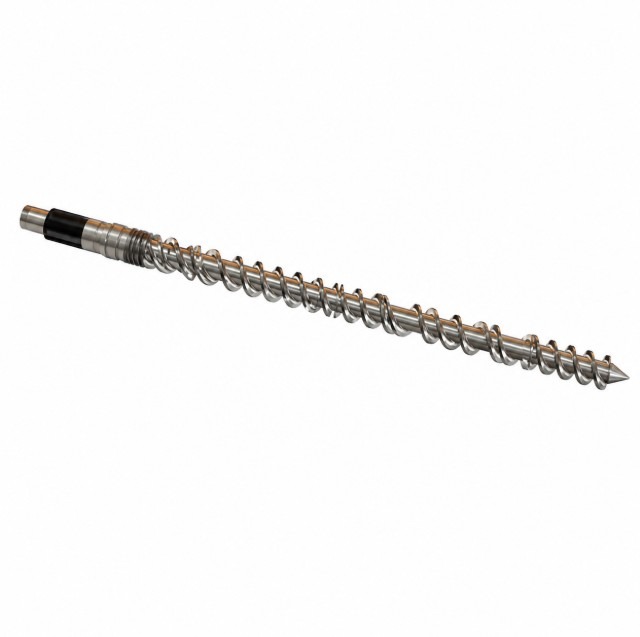
Rubber Screw And Barrels Product Overview
A Rubber Screw Barrel consists of a specially designed screw and barrel assembly engineered around the characteristics of rubber and elastomer compounds. Unlike conventional plastic-processing components, rubber processing often requires robust wear resistance, controlled compression, effective mixing, and resistance to challenging compounds.
Depending on the machine and application, rubber screw barrels can be manufactured with different screw geometries, flight configurations, compression ratios, barrel constructions, and surface treatments. Options may include single-screw designs, nitrided barrels, hardened surfaces, and application-specific alloy solutions. Screw geometry can also be developed for feeding, plasticizing, mixing, and controlled material discharge. Proper engineering ensures smooth material movement and helps achieve consistent extrusion performance.
Key Features
A high-performance Rubber Screw Barrel is designed with application-focused engineering and carefully selected materials. Common barrel base materials may include 38CrMoAlA (SACM645), EN41B, 42CrMo, and other engineering steels, depending on the required performance.
Key features can include:
- Precision-machined screw flights and barrel bore
- Wear-resistant working surfaces
- Nitrided or application-specific surface treatment
- Custom screw geometry for different rubber compounds
- Controlled compression and material residence time
- High dimensional accuracy for stable processing
- Single-screw configurations for rubber extrusion applications
- Custom diameters, lengths, L/D ratios, and flight designs
- Compatibility with application-specific extrusion machinery
The final material, hardness, geometry, and treatment should be selected according to the rubber compound, production conditions, and machine requirements.
High Performance Benefits for Screw And Barrels
Choosing the correct Rubber Screw Barrel can provide significant advantages throughout the extrusion process. Accurate screw and barrel geometry supports controlled material conveying and helps maintain consistent processing conditions. Wear-resistant construction can reduce premature component deterioration, particularly when processing demanding compounds or additives.
A properly engineered assembly can also contribute to stable output, improved mixing, reduced material wastage, and dependable production performance. Consistent clearances between screw and barrel help maintain predictable processing behavior. Application-specific designs may reduce unnecessary maintenance and extend component service life.
For manufacturers, these advantages can translate into better production control, fewer interruptions, and improved operational efficiency. The exact performance and service life depend on material selection, compound formulation, operating temperature, pressure, screw speed, and machine conditions.
Applications
Rubber Screw Barrels are primarily used in rubber and elastomer extrusion processes where controlled material conveying, mixing, and discharge are essential. They can be engineered for processing compounds used in hoses, seals, profiles, tubes, sheets, strips, gaskets, automotive rubber components, and industrial rubber products.
They are also relevant to manufacturers operating rubber extrusion lines for continuous-profile production. Different rubber formulations can place different demands on the screw and barrel, making application-specific design particularly important.
For high-output operations, the screw geometry and barrel construction must support the required throughput while maintaining consistent material flow. Selecting the correct configuration helps manufacturers match component performance with their compound, machine design, and production requirements.
Rubber Extrusion Screw Barrel Specifications
| Parameter | Typical / Available Specification |
|---|---|
| Product Type | Rubber Extrusion Screw Barrel |
| Screw Configuration | Single Screw / Application-Specific Design |
| Screw Diameter | Approximately 20 mm – 300 mm* |
| L/D Ratio | Approximately 18:1 – 40:1* |
| Base Materials | 38CrMoAlA, EN41B, 42CrMo and other engineering steels* |
| Surface Treatment | Nitriding / Hardened / Application-Specific Treatment |
| Screw Design | General Purpose / Mixing / Barrier / Custom Geometry |
| Manufacturing | Precision Machining & Application-Based Design |
| Customization | Diameter, Length, Geometry, Material and Surface Treatment |
| Application | Rubber & Elastomer Extrusion |
*Specifications may vary depending on machine requirements, rubber compound, extrusion process, operating conditions and customized screw barrel design.
Why Choose the Right Manufacturer For Rubber Screw Barrel?
Selecting an experienced Rubber Screw Barrel manufacturer is important because performance depends heavily on machining accuracy, metallurgy, heat treatment, surface quality, and screw-barrel clearances. A capable manufacturer should understand the relationship between rubber compound characteristics and screw geometry.
Look for a supplier offering precision manufacturing, application-based customization, quality inspection, material selection support, and technical assistance. Proper attention to dimensional tolerances and surface treatment can help deliver a component suited to the intended extrusion process. Customized engineering is particularly valuable when replacing an existing screw barrel or optimizing a specialized rubber extrusion line.
Request a Quote for Rubber Screw Barrel
Looking for a reliable Rubber Screw Barrel for your extrusion machine? Choose a configuration engineered around your rubber compound, machine dimensions, throughput, and operating conditions. Contact us Today share your existing screw-barrel drawing and technical requirements to discuss a suitable solution for your application.