

Bimetallic Screw Barrel Product Overview
Bimetallic screw barrel is a high-performance plasticizing component designed for demanding extrusion, injection molding, blow molding, compounding, and recycling applications. It combines a strong steel barrel body with a wear-resistant alloy lining inside the barrel bore. The screw is manufactured with a compatible hardened or hardfaced working surface to withstand demanding processing conditions.
For plastic processors, choosing the right bimetallic screw barrel can make a significant difference in production consistency, component life, and maintenance requirements. It is particularly useful when processing abrasive fillers, corrosive materials, recycled polymers, or high-performance engineering plastics where conventional nitrided screw barrels may experience faster wear.
As an experienced screw barrel manufacturer and supplier, Kaivanya focuses on application-specific screw and barrel solutions manufactured according to approved machine drawings, samples, dimensions, and processing requirements.
What Is a Bimetallic Screw Barrel?
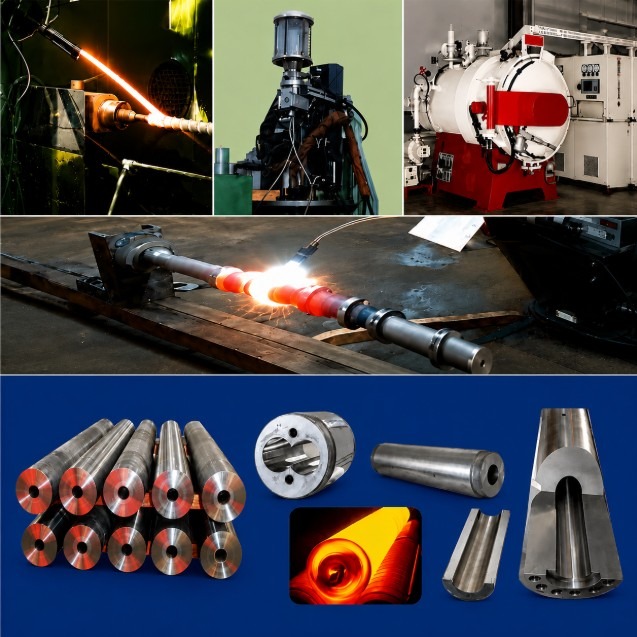
bimetallic screw barrel consists of two primary material zones: a high-strength steel outer body and a specially selected wear-resistant alloy lining on the internal bore. The lining protects the barrel against abrasion and corrosion while maintaining the dimensional stability required for efficient plastic processing.
The screw works inside the barrel to convey, compress, melt, mix, and homogenize the polymer before delivering the melt toward the die or mold. Depending on the application, the screw may feature hardened steel, nickel-based hardfacing, tungsten-carbide-reinforced surfaces, or another suitable wear-resistant treatment.
Bimetallic screw barrels are available for Extruder Machine, injection molding machines, blow molding machines, and specialized plastic processing equipment.
How Does a Bimetallic Screw Barrel Work?
During plastic processing, the screw rotates inside the barrel and continuously transports material through different processing zones. These typically include the feeding, compression, and metering sections, although specialized screw designs may also incorporate mixing, barrier, venting, or devolatilization sections.
Controlled heating from the barrel heaters, combined with friction and shear generated during screw rotation, helps transform the polymer into a uniform melt. The screw then builds the required pressure and conveys the material toward the die or mold.
The bimetallic barrel lining protects the internal bore from the wear generated by abrasive or corrosive materials. At the same time, the hardened or hardfaced screw flights help maintain the working geometry of the plasticizing system.
This screw barrel combination is important. Selecting a highly wear-resistant barrel without considering the screw material, processing conditions, and clearance can reduce the overall benefit of the system.
Key Features of a Wear-Resistant Bimetallic Screw Barrel
high-quality wear-resistant screw barrel can be engineered with different alloy systems according to the material being processed and the type of wear expected.
Depending on the design, the barrel may use iron-based, nickel-based, or nickel-cobalt-based alloy systems with hard phases such as chromium carbide or tungsten carbide. The internal surface is precision-machined and finished to achieve the required bore dimensions and working clearance.
The screw can also be manufactured with suitable hardfacing or hardened material to provide improved resistance against abrasive fillers and demanding polymers.
Available configurations can include customized diameters, L/D ratios, screw profiles, mixing sections, feeding zones, venting arrangements, feed openings, and machine-specific end connections.
Importantly, lining thickness, hardness, operating temperature, pressure, and service life should not be treated as universal specifications. These parameters depend on the alloy, machine design, polymer, processing conditions, and manufacturer’s technical requirements.
Benefits of Using a Bimetallic Screw Barrel
biggest advantage of a properly selected bimetallic screw barrel for plastic processing is improved resistance to wear and corrosion.
When the barrel and screw maintain their intended geometry for longer, the processing clearance remains more stable. This can help support consistent material conveying, melting, mixing, output, shot size, and finished-product quality.
For processors working with glass-filled polymers, mineral fillers, recycled materials, or corrosive formulations, improved wear resistance can also mean fewer unplanned component replacements and less production downtime.
Although the initial bimetallic screw barrel price may be higher than some conventional nitrided options, the overall value should be considered across the component’s operating life. Longer service intervals, reduced maintenance requirements, fewer production interruptions, and more consistent processing can contribute to a lower total cost of ownership.
The right design can also simplify replacement by maintaining compatibility with the existing machine’s heaters, sensors, feed openings, drive arrangement, and discharge connections.
Bimetallic Screw Barrel Applications
Bimetallic screw barrels are commonly selected for plastic processing applications where conventional surface treatments may not provide sufficient resistance.
They are particularly suitable for processing materials containing glass fiber, carbon fiber, calcium carbonate, talc, mineral fillers, pigments, recycled plastics, and other abrasive or potentially corrosive additives.
In injection molding, they can be used for automotive components, electrical parts, appliances, packaging products, and engineered plastic components where repeatable plasticizing performance is important.
For extrusion applications, bimetallic screw and barrel sets can be used for pipes, profiles, sheets, films, wire and cable coating, pelletizing, and wood-plastic composites.
They are also suitable for compounding and recycling operations where material composition can vary, and the plasticizing system is exposed to increased mechanical and chemical stress.
The correct alloy should always be selected according to the actual processing conditions and failure mechanism, whether the primary concern is abrasion, corrosion, adhesion, or a combination of these factors.
Bimetallic Screw Barrel Specifications
| Technical Parameter | Specification |
|---|---|
| Product Type | Bimetallic Screw Barrel / Matched Screw & Barrel Set |
| Base Material | High-strength alloy steel |
| Common Base Grades | 38CrMoAlA (SACM645), EN41B, 42CrMo, 34CrAlNi7, H13, SKD61 |
| Screw Diameter | 20–300 mm |
| Barrel Configuration | Single-screw, parallel twin-screw, conical twin-screw |
| L/D Ratio | 18:1–40:1 |
| Bimetallic Alloy Layer | Approx. 1.5–3.0 mm |
| Liner / Alloy Options | Tungsten carbide, nickel-based, cobalt-based, Colmonoy and application-specific alloys |
| Surface Hardness | Up to 65–70 HRC, depending on alloy and process |
| Bore / Inner Diameter | Manufactured according to machine and screw requirements |
| Working Length | Customised as per machine model and application |
| Overall Length | Customised as per OEM drawing or machine specifications |
| Flight / Bore Clearance | Engineered according to screw diameter, polymer and operating conditions |
| Screw Geometry | General-purpose, barrier, mixing, conveying or application-specific |
| Cooling System | Air cooling / Water cooling, as required |
| Heating System | Electric heater zones with temperature sensor provisions |
| Surface Finish | Precision-machined and application-specific finish |
| Applications | Extrusion, injection moulding, blow moulding, recycling and compounding |
| Suitable Materials | PE, PP, ABS, PVC, engineering plastics, filled, reinforced and recycled polymers |
| Customization | Screw profile, barrel bore, alloy composition, dimensions, coupling and mounting details as required |
How to Choose the Right Bimetallic Screw Barrel Manufacturer?
Choosing the right bimetallic screw barrel manufacturer in India is just as important as selecting the correct alloy.
A reliable manufacturer should first understand your application rather than simply offering a standard component. Important information includes the polymer being processed, filler type and percentage, operating temperature, screw speed, production output, material residence time, cleaning procedure, and the type of wear experienced by the existing screw barrel.
Ask the manufacturer about the proposed barrel alloy, screw hardfacing, liner thickness, hardness, dimensional tolerances, surface finish, and inspection process.
It is also worth checking whether the supplier can manufacture according to an OEM drawing, machine model, serial information, or physical sample. Proper inspection should cover critical dimensions, bore accuracy, straightness, concentricity, and relevant material or hardness documentation.
A capable bimetallic screw barrel supplier should also be able to advise whether repair, relining, replacement, or a completely new screw-and-barrel set is the most practical solution.
Avoid choosing a component based only on the lowest quotation or unsupported claims about service life. Material compatibility, manufacturing accuracy, application engineering, and after-sales technical support can have a much greater impact on long-term performance.
Request a Bimetallic Screw Barrel Quote
Looking for a bimetallic screw barrel manufacturer or supplier in India for a new machine, replacement, or performance upgrade?
Share your machine make and model, screw diameter, drawing or existing sample dimensions, polymer type, filler percentage, operating temperature, screw speed, production output, and current wear issue with Kaivanya.
Our team can evaluate the application and recommend a suitable bimetallic screw barrel configuration, material combination, screw geometry, manufacturing scope, and inspection requirements.
Contact Kaivanya today to discuss your screw barrel requirements and request a customized quotation.