
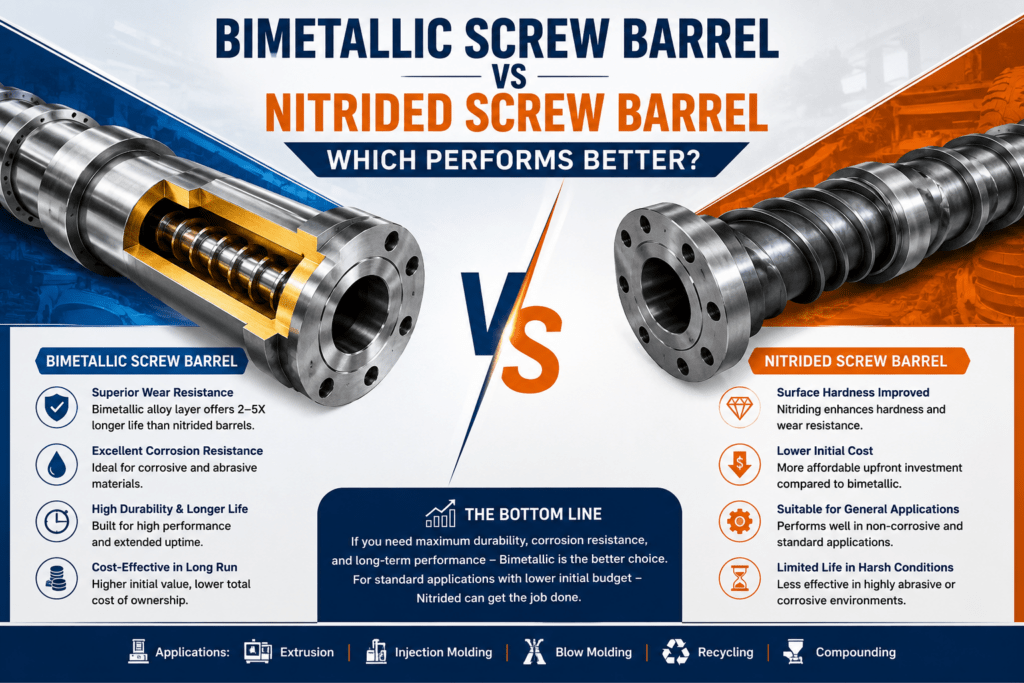
Bimetallic Screw Barrel and Nitrided Screw Barrel are two widely used options for extrusion and injection moulding machines. Both are designed to provide strength, durability, and reliable processing performance, but their construction, wear resistance, and application suitability are different. Understanding the difference between Bimetallic Screw Barrel vs Nitrided Screw Barrel helps manufacturers select the right solution for their specific production requirements.
A Bimetallic Screw Barrel is designed with a high-strength alloy steel base and an advanced wear-resistant inner layer made from materials such as tungsten carbide, nickel-based alloys, or cobalt-based alloys. This special liner provides superior protection against abrasion, corrosion, and high-temperature processing conditions. On the other hand, a Nitrided Screw Barrel is manufactured by applying a nitriding treatment on alloy steel, creating a hardened surface layer that improves wear resistance and service life.
What Is a Bimetallic Screw Barrel?
A Bimetallic Screw Barrel is a premium-grade barrel solution used in demanding plastic processing applications. It consists of a strong alloy steel body combined with a wear-resistant bimetallic liner inside the barrel. The liner is generally produced using advanced welding or centrifugal casting technology to achieve excellent hardness and durability.
The inner layer can include materials like:
- Tungsten Carbide
- Nickel-based alloy
- Cobalt-based alloy
- Chromium alloy
- Carbide composite materials
These materials provide exceptional resistance against abrasive fillers, recycled plastics, glass fiber materials, and corrosive polymers.
Bimetallic barrels are commonly used in applications such as:
- PVC pipe extrusion
- Blown film extrusion
- Masterbatch production
- Plastic compounding
- Injection moulding
- Engineering plastics processing
- Glass-filled polymer processing
The main advantage of a bimetallic screw barrel is its extended operational life, even under extreme processing conditions.
What Is a Nitrided Screw Barrel?
A Nitrided Screw Barrel is manufactured using high-quality alloy steel, followed by a surface hardening process called gas nitriding. During this process, nitrogen atoms penetrate the steel surface and create a hard nitrided layer.
Common materials used for nitrided barrels include:
- 38CrMoAlA Alloy Steel
- SACM645 Steel
- EN41B Steel
The nitriding process improves:
- Surface hardness
- Wear resistance
- Corrosion protection
- Dimensional stability
Nitrided screw barrels are widely used for standard plastic processing applications where moderate wear resistance is required.
Typical applications include:
- PE extrusion
- PP extrusion
- General injection moulding
- PVC processing
- Blow moulding applications
Nitrided barrels offer good performance at a cost-effective price, making them suitable for industries with standard production requirements.
Bimetallic Screw Barrel vs Nitrided Screw Barrel: Key Differences
| Feature | Bimetallic Screw Barrel | Nitrided Screw Barrel |
|---|---|---|
| Construction | Alloy steel base with a bimetallic wear-resistant liner | Alloy steel treated with a nitriding process |
| Surface Hardness | Higher hardness up to 62–70 HRC depending on material | Around 55–60 HRC |
| Wear Resistance | Excellent resistance against abrasive materials | Moderate wear resistance |
| Corrosion Resistance | Superior protection against corrosive polymers | Limited corrosion protection |
| Service Life | Longer operational life with reduced downtime | Medium operational life |
| Maintenance Requirement | Lower maintenance frequency and reduced replacement cost | Higher replacement possibility in harsh conditions |
| Cost | Higher initial investment with long-term benefits | More economical option |
| Heavy-Duty Applications | Highly recommended for abrasive and high-performance applications | Not suitable for extreme operating conditions |
Performance Comparison: Which One Performs Better?
When comparing Bimetallic Screw Barrel vs Nitrided Screw Barrel, the bimetallic option generally delivers better performance in demanding plastic processing environments.
1. Wear Resistance
Wear is one of the biggest challenges in extrusion and injection moulding machines. Materials containing glass fiber, minerals, fillers, and recycled plastics can quickly damage conventional barrels.
A Bimetallic Screw Barrel provides a highly wear-resistant inner surface that can handle aggressive materials for a longer period. Nitrided barrels provide good wear resistance but may lose their hardened layer faster in highly abrasive applications.
Winner: Bimetallic Screw Barrel
2. Corrosion Resistance
Certain polymers release corrosive gases during processing, especially PVC and chemical-based materials. These gases can attack the barrel surface and reduce performance.
Bimetallic barrels use corrosion-resistant alloys that protect the internal surface from chemical damage. Nitrided barrels provide limited corrosion resistance compared to bimetallic construction.
Winner: Bimetallic Screw Barrel
3. Production Efficiency
A high-quality barrel maintains consistent internal dimensions, stable pressure, and better plasticizing performance. This helps improve output quality and reduces production downtime.
Bimetallic barrels maintain their internal surface condition for longer periods, ensuring consistent processing performance.
Winner: Bimetallic Screw Barrel
4. Cost Effectiveness
Nitrided barrels have a lower initial purchase cost, making them suitable for companies with normal production requirements. However, frequent replacement due to wear can increase long-term operating costs.
Bimetallic barrels require a higher initial investment but provide a longer service life, reducing maintenance expenses over time.
Which Screw Barrel Should You Choose?
The selection between a Bimetallic Screw Barrel and Nitrided Screw Barrel depends on your machine type, processing material, and production environment.
Choose a Bimetallic Screw Barrel if you process:
- Glass-filled polymers
- Abrasive plastics
- Engineering plastics
- Recycled materials
- PVC compounds
- High-temperature polymers
Choose a Nitrided Screw Barrel if you process:
- Standard PE and PP materials
- Low-abrasion plastics
- General injection moulding applications
- Cost-sensitive production requirements
Why Choose Kaivanya Extrusion Technik for Bimetallic Screw Barrel Solutions?
Kaivanya Extrusion Technik is a leading Bimetallic Screw Barrel Manufacturer and Supplier providing high-performance extrusion and injection moulding components for plastic processing industries worldwide.
Our bimetallic screw barrels are manufactured using advanced technology, premium alloy steel materials, and wear-resistant liner solutions to achieve maximum durability and processing efficiency.
With expertise in manufacturing:
- Bimetallic Screw Barrels
- Extrusion Screw Barrels
- Injection Moulding Screw Barrels
- Twin Screw Barrels
- Customised Barrel Solutions
Kaivanya delivers reliable solutions designed for longer service life, improved productivity, and reduced machine downtime.
Bimetallic Screw Barrel vs Nitrided Screw Barrel
Both screw barrels have their own advantages, but a Bimetallic Screw Barrel performs better in heavy-duty plastic processing applications due to its superior wear resistance, corrosion protection, and longer lifespan.
For standard applications with moderate production demands, nitrided barrels remain a practical and economical choice. However, industries looking for maximum performance, reduced maintenance, and long-term cost savings should choose a high-quality Bimetallic Screw Barrel.
The right barrel selection can significantly improve machine efficiency, product quality, and overall production profitability.