

What Is an Extruder Machine and Why Is It Used in Industrial Production?
An extruder machine converts a prepared raw material into a continuous, accurately shaped product by pushing it through a specially designed die. It is widely used by plastic processors, PVC pipe and profile producers, compounders, food manufacturers, and 3D-filament businesses that need repeatable output at production scale. The right machine combines stable material feeding, controlled heat, dependable drive power, and an application-specific extruder screw. Buyers should consider the complete processing system—not output alone—to achieve consistent quality, lower waste, and dependable operation across every production shift.
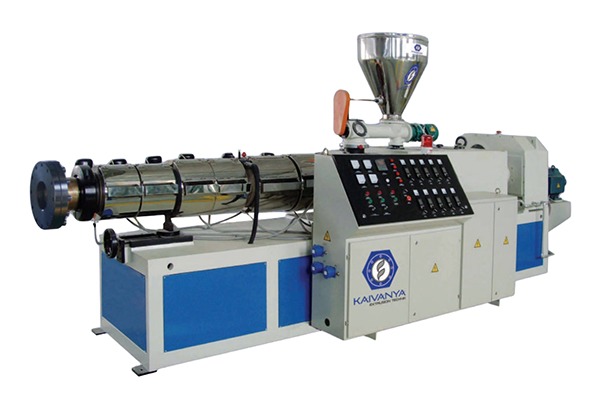
Single Screw and Twin Screw Extruder Machine Product Overview
An extrusion line typically includes a feeder, drive and gearbox, heated or cooled barrel, extruder screw barrel assembly, die, controls and downstream handling equipment. Material enters the barrel, where the rotating screw conveys, compresses, mixes, and conditions it before continuous discharge through the die. A single screw extruder is commonly selected for stable processing of uniform materials, while a twin screw extruder offers stronger mixing and flexible compounding capability. Available categories include the plastic extruder, PVC extruder machine, food extruder, filament extruder, and specialized profile lines. The best configuration is defined by the material, required output, final product geometry, and process-control needs.
Key Features of a High-Performance Plastic Extruder Machine
A well-engineered machine uses a rigid base, aligned drive train, and wear-resistant screw and barrel materials selected for the formulation being processed. Modular heating and cooling zones support accurate temperature control, while suitable feed, venting and filtration arrangements help stabilize melt or product quality. Screw diameter, L/D ratio, die design, motor power, control architecture and line speed should be matched to the application. Options may include corrosion-resistant contact parts, nitrided or bimetallic barrel construction, automated dosing, vacuum degassing, melt-pressure monitoring, and compatible downstream equipment. For demanding PVC, filled-polymer, or food recipes, screw geometry and metallurgy must be confirmed against actual material behavior and cleaning requirements.
Benefits of Choosing the Right Extruder Machine for Manufacturing
Correctly specified extrusion equipment helps manufacturers maintain uniform dimensions, surface finish, and material properties over longer production runs. Stable feeding and temperature management reduce avoidable scrap, while a properly matched screw profile can improve mixing and throughput without unnecessary energy demand. Durable wear surfaces and accessible service points support longer component life and faster maintenance. Integrated controls make start-up, monitoring, and recipe repeatability easier for operators. Application-specific guarding, interlocks and pressure or temperature alarms also strengthen operating safety when correctly configured and maintained. By selecting a line around the real material and end product, buyers gain dependable production, easier changeovers, and a clearer route to future capacity expansion.
Industrial Applications of Plastic, PVC, Food and Filament Extruder Machines
Extrusion supports producers that need continuous products with controlled cross-sections. A plastic extruder machine manufacturer in India may configure lines for PVC pipes, cable insulation, tubing, sheet, seals, and extruded profiles. A filament extruder machine serves 3D-printing material producers that require consistent filament diameter, while a food extruder machine can form snacks, cereals, pet food or textured ingredients when designed for the recipe and hygiene standard. Dedicated systems also produce extruded polystyrene, extruded panels and other engineered extruded products. Metal extrusion is a separate high-force process: an aluminium extruder produces extruded aluminium, extruded aluminium profiles, aluminium extruded sections and products such as an extruded aluminium heatsink using purpose-built presses, dies and handling lines.
Extruder Machine Specifications, Screw Design and Technical Details
| Technical Parameter | Available Configuration / Selection Requirement |
|---|---|
| Extruder Category | Single screw, co-rotating twin screw, counter-rotating twin screw or application-specific system |
| Process Materials | Thermoplastics, masterbatch, filled compounds, selected PVC formulations, food recipes or other trial-approved feedstocks |
| Screw Design | General-purpose, barrier, mixing, vented, modular-segmented or product-specific geometry |
| Screw and Barrel Metallurgy | Nitrided alloy steel, tool-steel elements or bimetallic construction selected for wear and corrosion conditions |
| Screw Size and L/D Ratio | Selected according to feedstock, residence time, mixing duty, output and product requirements |
| Main Drive | AC motor with variable-frequency drive, or application-specific drive and gearbox package |
| Feeding System | Gravity hopper, volumetric feeder, gravimetric dosing, loss-in-weight feeding or force feeding where required |
| Heating and Cooling | Independently controlled barrel zones with electric heating and air or water cooling, as designed |
| Venting and Degassing | Solid barrel, atmospheric vent, single or multiple vacuum-degassing sections |
| Melt Filtration | Manual, hydraulic, continuous or backflush screen-changing system according to material cleanliness and uptime targets |
| Process Monitoring | Screw speed, motor load, zone temperature, melt temperature and pressure indication with configurable alarms |
| Die Compatibility | Pipe, profile, tubing, sheet, film, strand, coating, pellet, food-shaping or filament dies |
| Downstream Equipment | Calibration, cooling, haul-off, cutting, winding, pelletizing, conveying, drying or product-handling equipment |
| Utilities and Connections | Model-specific electrical supply, cooling water, compressed air, vacuum and process-water connections |
| Control System | PID control or PLC/HMI automation with recipes, trends, alarms, interlocks and data-recording options |
| Operating Pressure | Defined by maximum allowable melt or die pressure; a valve-style pressure class is normally not applicable |
| Safety Provisions | Fixed and interlocked guards, emergency stops, overload protection and temperature or pressure alarms as specified |
| Standards and Documentation | Applicable machinery, electrical, food-contact and customer requirements; drawings, manuals and test records as contracted |
| Customization Options | Screw geometry, metallurgy, feeding, venting, filtration, automation, die and downstream line configuration |
How to Choose an Extruder Machine Manufacturer in Ahmedabad, India
Choose an extruder machine manufacturer that evaluates your raw material, target product, output, tolerances, and utilities before recommending equipment. A capable supplier should provide model-specific drawings and specifications, transparent testing criteria, documented quality checks, operator guidance, spare-parts support, and a realistic delivery plan. When comparing extruder manufacturers in India, a PVC extruder machine manufacturer India supplier, or an extruder machine manufacturer in Ahmedabad, assess relevant application experience rather than location or headline capacity alone. Ask for trial details, acceptance parameters, warranty scope, and after-sales response commitments in writing.
Get Extruder Machine Price and Request a Custom Quote
Looking for the right configuration or a dependable extruder machine price? Share your material, finished-product drawing, target output, tolerance, power supply, and available floor space. Contact us Today to receive a model-specific recommendation, technical details, delivery estimate, and commercial proposal.