

Plastic Recycling Screw Barrel Manufacturer in India
A plastic recycling screw barrel is one of the most important components of a plastic recycling extrusion machine. It is designed to efficiently process plastic waste such as film, flakes, regrind, agglomerates, fibers, production scrap, and other recycled feedstock into a consistent molten material for filtration, degassing, compounding, or pelletizing.
Unlike virgin plastic processing, recycling applications often involve changing material conditions. Moisture, contamination, bulk density, particle size, printing residues, and polymer degradation can vary from one batch to another. This is why choosing the right plastic recycling screw and barrel is essential for maintaining stable output, consistent melt quality, and reliable machine performance.
Kaivanya Extrusion provides application-focused screw barrel solutions designed around the customer’s machine, material, processing conditions, and production requirements. Whether you need a replacement component, custom-manufactured screw barrel, or a matched screw and barrel set, the design can be developed according to approved technical specifications.
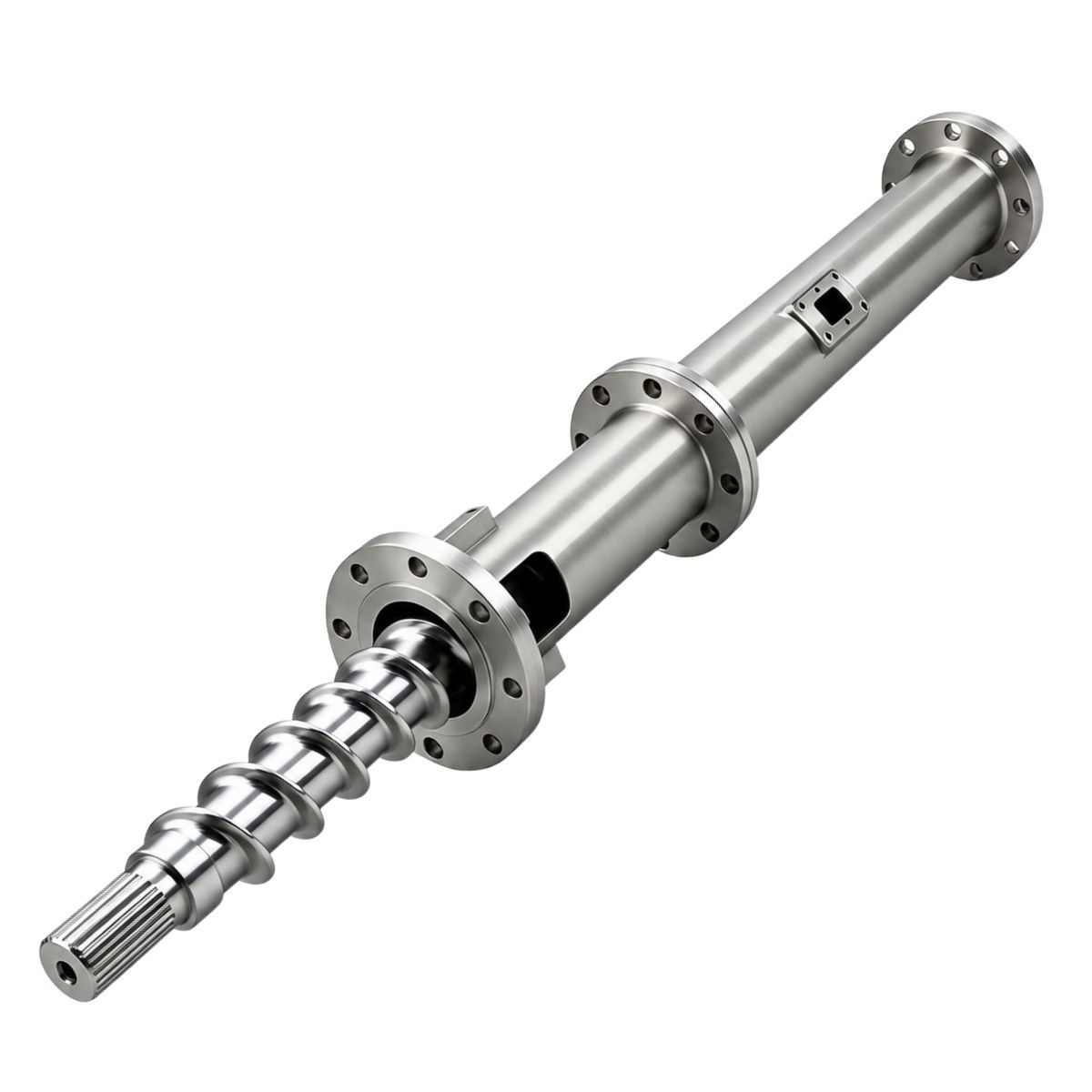
What Is a Plastic Recycling Screw Barrel?
plastic recycling screw barrel is the primary plasticizing and conveying assembly inside a recycling extruder. The screw rotates inside the barrel to transport plastic feedstock through different processing zones while generating controlled heat, pressure, mixing, and melting.
The system is commonly used for recycling materials such as PE, PP, PS, ABS, PA, PET, and selected polymer blends, depending on material preparation and machine configuration.
For recyclers and plastic processors, the objective is not simply to melt plastic. The screw and barrel must provide controlled feeding, effective melting, suitable mixing, appropriate degassing, and stable pressure before the material reaches the filtration and pelletizing stages.
A properly selected recycling extruder screw barrel can therefore contribute to more consistent pellets, smoother extrusion, reduced process adjustments, and dependable long-term operation.
How Does a Plastic Recycling Screw and Barrel Work?
The screw barrel assembly works as part of a complete recycling extrusion system. Depending on the machine, the setup may include a rotating screw, heated barrel zones, temperature sensors, cooled feed throat, venting or vacuum ports, screen changer, melt pump, and pelletizing system.
Plastic waste enters through the feeding section and is gradually conveyed forward by the rotating screw. As the material moves through the screw profile, compression and mechanical energy help initiate melting and homogenization. The screw geometry is designed to manage the changing characteristics of recycled feedstock and maintain suitable melt flow.
In vented recycling systems, atmospheric or vacuum degassing can help remove trapped air, moisture, and volatile substances before filtration. The melt then moves toward the screen changer or filtration system, where unwanted contamination can be separated before pelletizing or further processing.
The exact plastic recycling screw design depends on the material, feed form, required output, machine dimensions, filtration arrangement, screw speed, and desired processing results.
Key Features of a Plastic Recycling Extruder Screw Barrel
high-quality plastic recycling screw barrel should be selected according to the actual recycling application rather than based only on standard dimensions.
Kaivanya Extrusion can develop screw barrel configurations around factors such as screw diameter, L/D ratio, feed-zone capacity, compression profile, mixing requirements, venting position, pressure-building section, and machine interface.
For demanding recycling applications, material selection is equally important. Depending on the polymer and contamination level, options may include nitrided alloy steel, bimetallic barrel construction, hardfaced screw flights, wear-resistant materials, or hardened steel solutions.
High-capacity feeding sections can be considered for low-bulk-density materials such as films and lightweight flakes. Customized mixing and compression sections can help achieve more consistent melting and homogenization.
Both single-screw recycling extruders and twin-screw configurations can be engineered depending on the application. Twin-screw systems may be particularly suitable where intensive mixing, additive incorporation, compatibility, fillers, or reinforcing fibers are part of the recycling process.
Benefits of Using the Right Recycling Screw Barrel
Selecting the correct recycling screw barrel can have a direct impact on extrusion stability and overall recycling performance.
A suitable screw profile helps improve the handling of irregular feedstock, including flakes, regrind, film, agglomerates, and production scrap. Controlled conveying and compression can support consistent melting, while appropriate mixing helps achieve a more uniform melt temperature and material distribution.
For recycled polymers containing moisture or volatile substances, an appropriately designed venting system can support effective degassing. This can be especially important when processing washed flakes, printed films, or materials with residual moisture.
Wear-resistant screw and barrel materials can also help maintain critical working clearances over time, particularly when recycled feed contains abrasive contaminants, fillers, glass fibers, or other demanding materials.
With an OEM-compatible design, replacement and installation can be simpler, helping reduce unnecessary machine downtime and commissioning issues.
Ultimately, the right screw barrel can help plastic recyclers work toward stable throughput, improved pellet consistency, reduced process variation, lower maintenance interruptions, and more predictable recycling performance.
Plastic Recycling Screw Barrel Applications
Plastic recycling screw barrels are used across a wide range of recycling and plastic processing operations.
They can support the recycling of post-industrial and post-consumer materials from film, packaging, injection molding, pipe, profile, fiber, nonwoven, woven bag, raffia, and compounding applications.
Typical feedstock can include production scrap, edge trim, rejected molded components, purging material, washed film flakes, rigid regrind, woven plastics, agglomerates, and sorted plastic waste.
For relatively straightforward PE or PP regranulation, a single-screw recycling screw barrel may be suitable. Application fillers, color concentrates, stabilizers, reinforcing fibers, or intensive material blending may benefit from a twin-screw configuration.
Materials such as PET or recycling feedstock with higher moisture levels may require appropriate drying and degassing before or during extrusion.
The best screw barrel configuration depends on the desired result. This may include consistent pellet quality, better degassing, contamination management, additive dispersion, gentle processing, or higher output from low-density recycled feedstock.
Plastic Recycling Screw Barrel Specifications
| Specification | Details |
|---|---|
| Application | Plastic Recycling & Extrusion |
| Screw Type | Single / Twin Screw |
| Diameter | Customized as per machine requirements |
| L/D Ratio | As per application and machine requirements |
| Material | Alloy Steel / Special Tool Steel |
| Surface Treatment | Nitriding / Wear-Resistant Treatment |
| Screw Design | Recycling, Feeding & Mixing Profile |
| Barrel Type | Standard / Vented Barrel |
| Hardness | Customized as per application |
| Cooling | Air / Water Cooling |
| Compatibility | OEM Machine / Custom-Made |
| Supply | Screw, Barrel or Matched Screw & Barrel Set |
How to Choose a Plastic Recycling Screw Barrel Manufacturer?
Choosing the right plastic recycling screw barrel manufacturer is important because screw and barrel performance depends on much more than basic dimensions.
A reliable manufacturer should understand the relationship between the recycled material, screw geometry, barrel construction, wear conditions, filtration system, and machine operating parameters.
Before placing an order, provide details about your machine make and model, polymer type, feedstock condition, required output, screw diameter, L/D ratio, current screw profile, operating temperature, screw speed, and filtration arrangement.
For replacement requirements, an approved drawing or physical sample can help establish critical dimensions and interfaces.
Material selection should also be discussed according to the application. Abrasive, corrosive, highly contaminated, or glass-filled materials may require different wear protection from clean post-industrial regrind.
Quality control is another important consideration. Dimensional inspection, bore measurement, concentricity, straightness, hardness verification, material traceability, and inspection documentation can provide greater confidence in the finished component.
The best plastic recycling screw barrel supplier in India is not simply the one offering the lowest price. It is the manufacturer capable of matching the component to your machine and actual recycling process.
Contact Us
Our technical team can review the application and help identify a suitable plastic recycling screw and barrel configuration, material option, wear protection, and manufacturing specification.
Contact Kaivanya Extrusion today to discuss your custom recycling screw barrel requirement and request a technical quotation.