

What Is a Screw Barrel?
screw barrel is a functional component that transports, compacts, softens, and mixes polymer inside an extrusion and injection moulding machine. Kaivanya Extrusion Technik is a manufacturing company that specializes in supplying different screw barrels for plastic processors/machine builders/maintenance/service and OEM. Every set is performed as per machine type, polymer, filler content, and operating conditions. You can choose nitrided or bimetallic for extrusion, injection moulding, blow moulding, recycling, and compounding. One simple reason to opt for an application-matched design is that it promotes reliable plasticising, controlled material flow, and a clearer long-term maintenance choice.
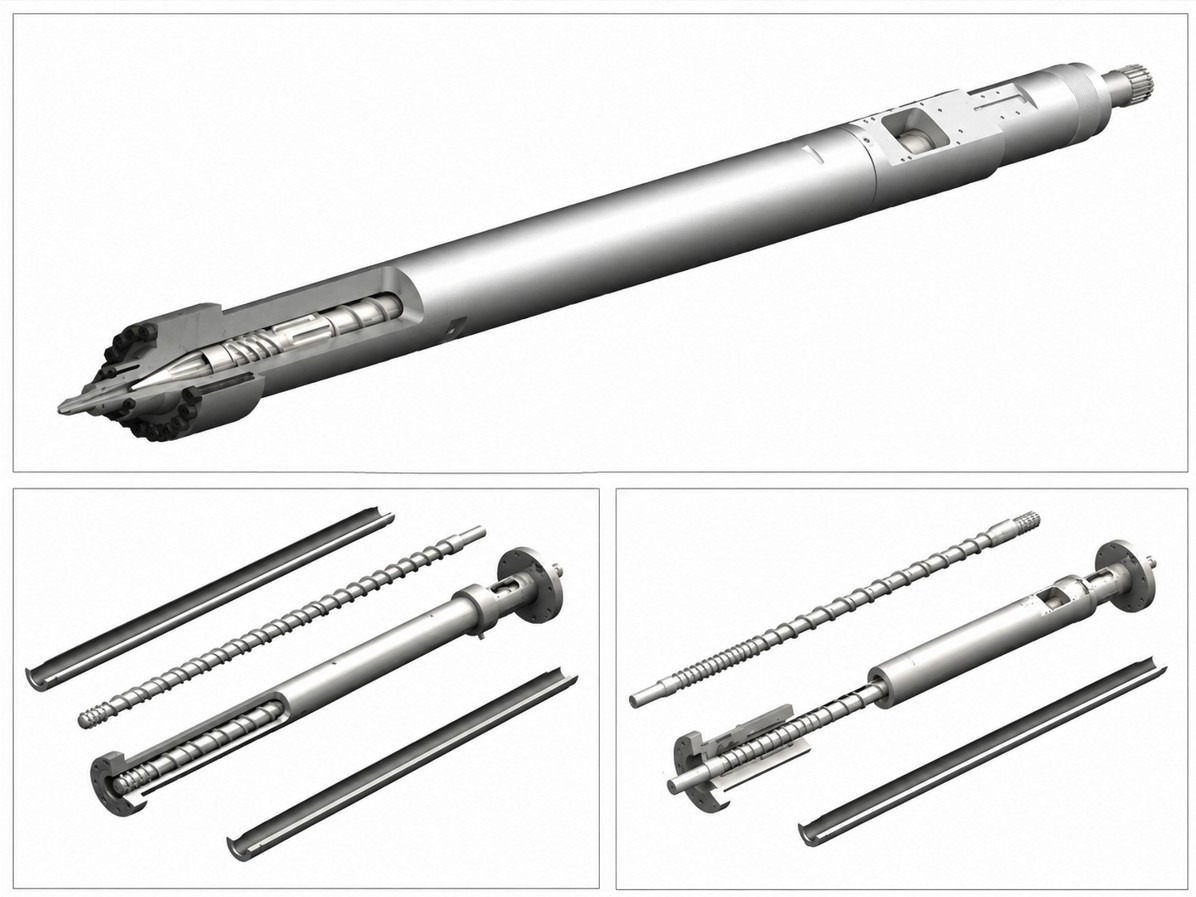
How a Custom Screw and Barrel Works in Plastic Processing
Inside the non-moving barrel, a rotating screw drives material from feed to melt through compression and melting (both of these are taken care of by the helical flights), mixing zone, and metering zone. The feedstock is processed into a controlled melt for injection or continuous extrusion through barrel heating and shear energy. There are many different product categories, including: single-screw, twin-screw; vented or barrier technologies; as well as mixing, injection, and extrusion configurations. Protection systems available are nitrided surfaces, hard-facing on critical screw areas, and bimetallic bore linings for more severe wear or corrosion environments. In contrast to a catalogue element chosen simply by diameter, an appropriately specified screw and barrel takes into account L/D ratio, pitch, flight depth, compression ratio, clearance, drive details, as well as behaviour of the polymer in question. This review divides normal replacement products from extreme-service upgrades.
Key Features of Our High-Performance Screw And Barrel
Base-material options 38CrMoAlA (SACM645), EN41B, 42CrMo, H13, and SKD61 also remain on the Kaivanya list. Application-specific flight geometry ensures controlled mixing while conveying, with sizes verified on a formal drawing. Both nitriding, nickel-based, cobalt-based, and tungsten-carbide-bearing systems offer various wear-protection alternatives for approved process specifications. Custom diameters, lengths, and L/ D ratios also include pitch, compression, and connections for the newest machines or OEM replacements. Instead of assigning a universal rating, temperature, pressure, speed, and torque are reviewed based on data that has been captured from real machines. If permitted as part of the original manufacturing data or buyer-approved sample measurements, clearance and surface-finish requirements can also be ordered. Before starting manufacture, you should agree in the quotation what inspection is required and any documentation that will be provided.
Screw Barrel Applications for Extrusion, Injection and Recycling
Screw barrels are employed in all cases where materials polymers need to be transported, melted or mixed and put under controlled pressure. Automotive parts, houseware items including containers and electronics, along with industrial products, demand consistent plasticising from injection moulders. Blown film, pipe, profile and sheet; cable coating; lamination; strapping and raffia and filament production are carried out at extrusion plants. Melt preparation for bottles, containers, drums and tanks adds reliability to blow moulding operations. Reprocessed or heavily filled materials may also require venting, enhanced mixing and wear protection on recycling and compounding lines. Kaivanya caters to applications that require rubber and food-processing–as well as briquette-equipment solutions. A configuration is then provided for each sector based on the material, machine, and production objective. This is why it’s more about application data rather than an industry tag.
Benefits of an Application-Matched Screw Barrel
As a result, the flow, which is now uniform in the melt, needs to be evenly supported with stable material through this arrangement, and repeatable processing can take place. Metallurgies that are appropriate for specific applications and wear areas, particularly if they have been matched to the resin and fillers in actual use (for example, fused nickel/chrome alloys), reduce premature component failure. We make replacement planning easier and reduce the likelihood of avoidable installation changes by providing verified drive, mounting, and end details. Instead of forcing a generic design into the machine, custom geometry helps because it enables the processing unit to work with what is needed and produce specified output. Suitable worn components can also be refurbished or rebuilt, in part by inspection, extending serviceable value. It also assists maintenance teams in scheduling changes for planned downtime. Combined, these selections enable scheduled maintenance, especially for predictable production and improved total-cost-of-ownership decision-making.
Our Screw Barrel Technical Specification
| Technical Specification | Details |
|---|---|
| Screw Diameter | 20 mm – 300 mm |
| L/D Ratio | 18:1 – 40:1 |
| Screw Type | Single Screw & Twin Screw (Bimetallic & Nitrided) |
| Barrel Type | Single Barrel & Twin Barrel (Bimetallic & Nitrided) |
| Material | High-Strength Alloy Steel |
| Surface Hardness | Up to 62–70 HRC |
| Heat Treatment | Gas Nitriding / Vacuum Heat Treatment |
| Applications | Blow Moulding, Extrusion & Injection Moulding |
The final specification should be confirmed from the extruder model, screw dimensions, polymer type, operating temperature, pressure, throughput, and processing conditions. Customized designs can be developed when standard dimensions do not meet the machine or application requirements.
Why Choose a Leading Screw Barrel Manufacturer in India
Kaivanya Extrusion Technik has been manufacturing bimetallic screws and barrels since 1998. Its offering ranges from extrusion, injection moulding, twin-screw, and replacement parts – all underpinned by its computer-controlled turning- and milling-based capabilities. Custom Design, Drawing | Development | OEM Replacement Retrofit Spares Hard-Facing Lining Rebuilding & Refurbishment. Summit is known for its custom capabilities; however, customers also use us to design different parts and assemblies based on their drawings. It serves Indian and international markets, including the USA, Europe/Africa/Middle East/Asia. Ongoing technical assistance, specification, and order coordination. In the technical quotation, strengthen control over purchasing by confirming the final drawing/grade of material/protection system/inspection documents/schedule for delivery and scope for after-sales, etc.
Contact Us
Are you looking to refit a new machine with a larger-diameter custom screw barrel, in urgent need of replacing one, or want to upgrade an existing one due to wear? Provide the machine type, component drawing or sample description, polymer and filler content percentage, along with the required output and running data. Get a technical quote from Kaivanya Extrusion Technik and review the recommended material, geometry, inspection scope, delivery, and total cost of ownership before placing an order.