

Bimetallic Liner Manufacturer & Supplier
A Bimetallic Liner is an advanced protective layer used inside extrusion and injection molding barrels to improve durability, wear resistance, and machine performance. It is manufactured by applying a highly wear-resistant alloy layer inside a high-strength steel barrel body. This technology helps protect the barrel against abrasion, corrosion, high temperature, and aggressive plastic materials.
Industries processing glass-filled plastics, mineral-filled polymers, recycled plastics, PVC compounds, masterbatch, and engineering polymers require high-performance barrel solutions. A bimetallic liner provides extended service life compared to conventional nitrided barrels by creating a strong protective inner surface.
A bimetallic liner is a specially engineered inner barrel lining designed to significantly improve the durability and performance of extrusion and injection moulding machines. Manufactured using advanced centrifugal casting technology, a bimetallic liner combines a tough steel outer body with a highly wear-resistant and corrosion-resistant alloy inner layer. This unique construction ensures longer service life, reduced maintenance costs, and consistent processing performance, even under demanding production conditions.
What is a Bimetallic Liner?
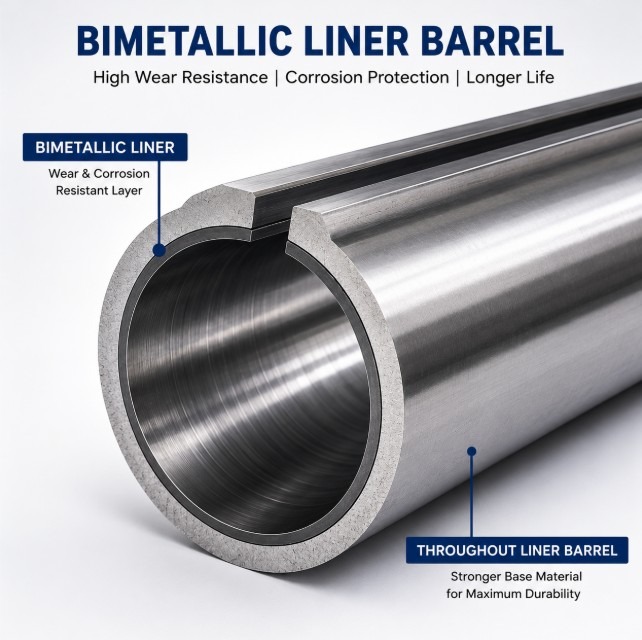
A bimetallic liner is a composite material structure consisting of two different metals or alloys. The outer layer is generally made from a high-strength steel base material, while the inner surface contains a wear-resistant alloy layer.
The inner liner is commonly manufactured using Nickel-based alloys, Cobalt-based alloys, Tungsten Carbide alloys, or other carbide-reinforced materials. These materials provide excellent resistance against mechanical wear and chemical corrosion during plastic processing operations.
The main purpose of a bimetallic liner is to increase barrel life and maintain consistent extrusion performance under demanding industrial conditions.
Construction of Bimetallic Liner
A high-quality bimetallic liner for screw barrels consists of three major components:
1. Base Steel Material
The external barrel body is manufactured using premium-quality alloy steels such as:
- 38CrMoAlA
- EN41B
- SACM645
- H13 Tool Steel
These materials provide excellent strength, dimensional stability, and resistance to high operating pressure.
2. Wear Resistant Inner Layer
The inner surface is protected with a special alloy liner that provides superior:
- Abrasion resistance
- Corrosion protection
- Thermal stability
- Longer operating life
Common liner materials include:
- Tungsten Carbide
- Nickel-based alloys
- Cobalt-based alloys
- Colmonoy alloy
3. Metallurgical Bonding
The liner is permanently bonded with the barrel using advanced manufacturing processes. This ensures strong adhesion between the base steel and protective alloy layer, preventing cracks, separation, or surface damage during continuous production.
Advantages of Bimetallic Liner
A bimetallic liner for extrusion barrels offers several advantages:
Extended Barrel Life
The wear-resistant inner layer significantly reduces barrel damage caused by abrasive fillers and high-speed screw rotation.
High Wear Resistance
Bimetallic liners are designed to handle tough materials such as:
- Glass fiber reinforced plastics
- Carbon-filled polymers
- Mineral-filled compounds
- Recycled plastics
Better Corrosion Protection
The advanced alloy layer protects against corrosive gases and chemicals generated during plastic processing.
Improved Production Efficiency
A durable barrel surface helps maintain accurate clearance between screw and barrel, improving:
- Material output
- Melt quality
- Energy efficiency
- Product consistency
Reduced Maintenance Cost
Longer service life reduces machine downtime and replacement frequency, helping manufacturers achieve better productivity.
Applications of Bimetallic Liner
Bimetallic liners are widely used in:
- Plastic extrusion machines
- Injection molding machines
- Twin screw extruders
- Blown film plants
- PVC pipe extrusion lines
- Sheet extrusion machines
- Cable extrusion plants
- Masterbatch production
- Compounding industries
- Recycling applications
Bimetallic Liner Material Selection
The selection of liner material depends on application requirements, processing temperature, and plastic material properties.
For highly abrasive applications, Tungsten Carbide-based liners provide exceptional wear protection. For corrosive environments, nickel and cobalt-based alloys offer excellent chemical resistance.
A proper material combination helps achieve maximum barrel performance and longer machine life.
Why Choose High-Quality Bimetallic Liner?
A premium-quality bimetallic liner ensures:
- Superior surface hardness
- Excellent wear resistance
- High temperature performance
- Longer operational life
- Stable extrusion output
- Reduced maintenance requirements
Manufacturers using advanced bimetallic liner technology can improve production reliability and achieve consistent product quality.
Conclusion
A Bimetallic Liner is an essential component for modern extrusion and injection molding machines where high performance and durability are required. Its advanced alloy protection layer provides outstanding resistance against abrasion, corrosion, and thermal wear.
By choosing the right bimetallic liner material and manufacturing technology, industries can increase machine efficiency, reduce downtime, and achieve long-term cost savings.